It is one of the most common questions people ask about dentistry as a profession, and the answer is shorter than most people expect. Dentists do not go to medical school. They go to dental school, which is its own separate four-year doctoral program with its own admissions process, its own board exams, and its own licensing path. But the two programs overlap far more than most people realize, and there is one situation where a dentist genuinely does earn a medical degree. Here is how the whole thing actually works.
No. Dentists attend dental school, not medical school, and earn either a DDS or a DMD. Those two degrees are equivalent. The first couple of years of dental school cover much of the same biomedical science as medical school, sometimes in the same classrooms, before dental students move into clinical training focused on the mouth, teeth, and jaws. The one real exception is oral and maxillofacial surgery, where some residency programs award a medical degree alongside the dental one.
Do Dentists Go to Medical School? What They Do Instead
The route into dentistry is closer to medicine than most people assume, it just branches at a different point.
- A bachelor’s degree. Usually four years, with prerequisite coursework in biology, chemistry, organic chemistry, and physics. There is no required major, though most applicants come from the sciences.
- The Dental Admission Test. Dentistry’s equivalent of the MCAT, covering natural sciences, reading comprehension, quantitative reasoning, and a perceptual ability section that tests spatial reasoning. That last part is unique to dentistry, for reasons that become obvious the first time you work inside a mouth.
- Dental school. Four years, ending in a DDS or DMD.
- Board examinations and licensure. National written examination plus a clinical examination, with specific requirements set by the state where you plan to practice.
- Optional residency. More on this below, because it is where dentistry and medicine differ most.
Total time from starting college to practicing as a general dentist is typically eight years. For a physician, it is usually eleven or more once residency is included.
| Dentistry | Medicine | |
|---|---|---|
| Admission test | Dental Admission Test, including a perceptual ability section | MCAT |
| Degree awarded | DDS or DMD — equivalent to each other | Medical degree |
| Professional school | Four years | Four years |
| Residency | Optional for general dentistry | Mandatory, typically three to seven years |
| Time from starting college to practicing | About eight years | Usually eleven or more |
DDS or DMD: Is There a Difference?
No. This trips people up constantly, so it is worth being clear.
DDS stands for Doctor of Dental Surgery. DMD stands for Doctor of Dental Medicine. They are the same degree, representing the same education and the same scope of practice. Which one you receive depends entirely on which school you attended, because individual universities chose different names historically. A dentist with a DMD and a dentist with a DDS completed equivalent training and can do exactly the same work.
If you are a patient comparing two dentists, the letters after their names tell you nothing about their skill or their focus. What they have studied since graduating tells you far more.
Where Dental School and Medical School Overlap
Here is the part that surprises people. The first half of dental school looks a lot like the first half of medical school.
Dental students study anatomy, physiology, biochemistry, microbiology, pathology, and pharmacology. At many universities, dental and medical students sit in the same lectures for some of these courses, taught by the same faculty. The reasoning is straightforward: the mouth is connected to the rest of the body, and you cannot treat it safely without understanding the whole patient.
That matters in practice more than people think. A dentist needs to understand how a patient’s blood pressure medication affects bleeding, how uncontrolled diabetes affects healing, how a heart condition changes what anesthetic is appropriate, and which medications interact with what they are about to prescribe. Dentists are the ones who often spot signs of systemic disease first, because they are looking inside the body on a regular schedule.
Where the paths split is the second half. Medical students rotate through specialties across the entire body. Dental students move into clinical training concentrated on the teeth, gums, jaws, and surrounding structures, and they start treating patients under supervision.
The One Case Where Dentists Do Go to Medical School
Oral and maxillofacial surgery is the genuine exception.
These are the surgeons who handle wisdom teeth, dental implants, corrective jaw surgery, facial trauma, and reconstruction. Their training is long, and some residency programs are structured as dual-degree tracks where the resident earns a medical degree in addition to their dental degree, and completes a general surgery internship as part of the program.
So a dentist who went to medical school is almost always an oral surgeon who took that route. It is a real path, it is just a specific one, and it is not what happens for the vast majority of dentists.
Residency: Required in Medicine, Optional in Dentistry
This is the biggest structural difference between the two professions, and it is the one most people miss.
In medicine, residency is mandatory. A newly graduated physician cannot practice independently and must complete a residency, typically three to seven years depending on the field.
In dentistry, a graduate can be licensed and practice general dentistry without a residency. Many choose to complete an optional additional year, usually a general practice residency or an advanced education in general dentistry program, to build confidence and experience. But it is not required.
Residency is required for the recognized dental specialties, which include orthodontics, oral and maxillofacial surgery, periodontics, endodontics, prosthodontics, pediatric dentistry, and several others. Those programs run two to six years beyond dental school depending on the specialty.
What Dental School Does Not Cover

Because a general dentist can practice straight out of school, dental school has to cover an enormous amount of ground in four years. Something has to give, and what tends to give is depth in the elective, procedure-specific areas.
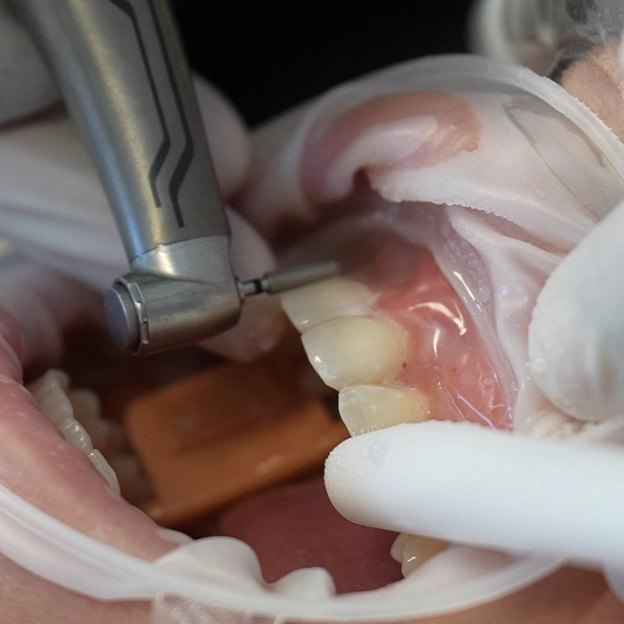
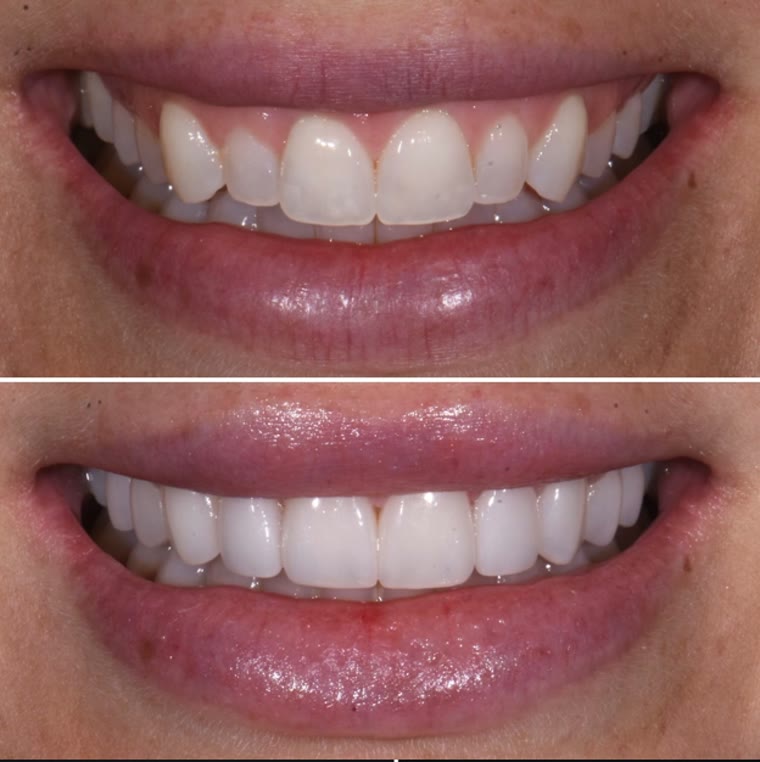
Cosmetic dentistry is the clearest example. It is not a recognized dental specialty, which means there is no residency for it. Any licensed general dentist can legally offer cosmetic procedures including veneers, including no prep and prepless techniques. But most dental programs cover them lightly, often with limited hands-on experience before graduation. Plenty of dentists finish school having never prepped or delivered a veneer case.
That gap is why continuing education exists. Dentists are required to complete continuing education to maintain licensure, with the specific hours set by each state, and it is where most of the procedure-specific skill in a dentist’s career actually gets built. Not in school. Afterwards, deliberately, one subject at a time.
I went through this myself. Learning cosmetic dentistry properly took me years of courses, a lot of research, and a real amount of money on top of what dental school already cost. The knowledge was out there. It just was not in the curriculum.
Key Takeaways
- Dentists do not attend medical school. They complete a separate four-year dental program.
- DDS and DMD are equivalent degrees. The difference is which school awarded it, nothing more.
- The first years of dental school overlap heavily with medical school, sometimes in the same classrooms.
- Oral and maxillofacial surgery is the exception, where some residencies award a medical degree too.
- Residency is mandatory in medicine and optional for general dentistry.
- Cosmetic dentistry is not a recognized specialty, so no residency exists for it.
- Procedure-specific skills like veneers are usually built through continuing education after graduation.
Action Items
If you are considering dentistry as a career:
- Check the prerequisite coursework for the schools you are interested in early, since requirements vary.
- Shadow a general dentist and a specialist. The day-to-day work differs enormously between them.
- Take the perceptual ability portion of the admission test seriously. It measures something the other sections do not.
- Ask any dentist you shadow what they had to learn after graduating. The answers are usually revealing.
If you are already practicing:
- List the procedures patients ask you for that you currently refer out. That list is your continuing education roadmap.
- Check your state’s continuing education requirements and confirm which credits count toward them.
- Pick one procedure to get genuinely good at this year rather than sampling several.
- Track which cases make you uncomfortable. Discomfort usually points at a specific gap, not a general one.
Frequently Asked Questions
Yes. A DDS or DMD is a doctoral degree, and dentists are doctors within their scope of practice. They are not physicians, which is a different degree and a different scope.
Usually eight years after high school: four years of undergraduate study and four years of dental school. Specialties add another two to six years of residency on top of that.
They are difficult in different ways. The academic load in the early years is comparable, and dental school adds a significant hands-on technical component early on, because dentists perform procedures from the start of their clinical training.
Yes, within the scope of dental practice. That typically covers antibiotics, pain medication, and other drugs related to dental treatment, which is one reason pharmacology is part of the curriculum.
Usually only at an introductory level. Coverage varies by program, and many graduates have limited or no hands-on veneer experience. Most dentists who offer veneers learned the procedure through continuing education after graduating.
Not in the sense of a recognized specialty, because cosmetic dentistry is not one. Any licensed general dentist can offer cosmetic procedures. What differentiates them is the training they have pursued and the experience they have built, which is worth asking about directly.
Conclusion
So, do dentists go to medical school? No, but the training is closer to medicine than the separate name suggests, and the two paths share a foundation before splitting toward different parts of the body. The more interesting part of the answer is what happens after graduation. Because general dentists can practice without a residency, and because cosmetic dentistry has no specialty track at all, the skills a dentist offers ten years in are largely the ones they went out and learned on purpose.
If veneers are on that list for you, the Veneer Blueprint Course covers the full process from case selection through bonding, the way I wish it had been laid out for me when I was starting. You can see how the courses are structured on the courses page, and the CE information page explains how the credits work.