what are prepless porcelain veneers?

So what are prepless veneers? Prepless Veneers are Porcelain Veneers that are thin shells of porcelain in in that are bonded to the front surfaces of the teeth to improve the color, shape, size, symmetry, straightness, and fullness of the smile.

Prepless Veneers means that there is some enameloplasty, contouring, or alterations made to the tooth structure or enamel prior to the veneers going over the teeth. Again, to clarify this contouring is limited to the enamel surface and done strategically and conservatively.

Prepless Veneers also are a mostly additive procedure to the teeth.

Here are some similarities between no prep veneers and prepless veneers…

When doing Both No prep and Prepless Porcelain veneer restorations, we are not drawing any margins onto the teeth.

Also, in many cases, the patient does not wear temporaries in the interim time between their first visit and second visit while the permanent veneers are being made by the lab.

If you’re a Dentist and want to learn how to do veneers, check out https://drtejaspatel.podia.com/ to find out more about my Veneer Courses.

In my Veneer Blueprint Course we review:

How to do porcelain veneers, treatment planning, case selection, case presentation, labs, material selection, veneer reduction requirements, veneers and occlusion, smile design, veneer preparation steps and sequence, recommended burs, no prep veneers, prepless veneers, minimal prep veneers, live video of veneer preparation, veneer temporization and veneer cementation, dealing with complications and troubleshooting, laminate veneer cases from a to z, case reviews, marketing, dental photography, and so much more!

In my No Prep Veneer Course we review:

What are No Prep Veneers and what are Prepless Veneers and how are they used, Minimally invasive smile makeover options using veneers, Treatment planning, case selection, material selection, Occlusion, Smile Design, Anterior Teeth Esthetics, Lab Communication, the Steps of the Procedure, complications, and case studies.

What Are No Prep Porcelain Veneers and Prepless Porcelain Veneers?

So what are no prep veneers? No Prep Veneers are Porcelain Veneers that are thin shells of porcelain that are bonded to the front surfaces of the teeth to improve the color, shape, size, symmetry, straightness, and fullness of the smile.

True No Prep Veneers means that there are no alterations to the tooth structure so the veneers go directly over the natural teeth.

No Prep Veneers are an additive procedure to the teeth.

If you’re a Dentist and want to learn how to do veneers, check out https://drtejaspatel.podia.com/ to find out more about my Veneer Courses.

In my Veneer Blueprint Course we review:

How to do porcelain veneers, treatment planning, case selection, case presentation, labs, material selection, veneer reduction requirements, veneers and occlusion, smile design, veneer preparation steps and sequence, recommended burs, no prep veneers, prepless veneers, minimal prep veneers, live video of veneer preparation, veneer temporization and veneer cementation, dealing with complications and troubleshooting, laminate veneer cases from a to z, case reviews, marketing, dental photography, and so much more!

In my No Prep Veneer Course we review:

What are No Prep Veneers and what are Prepless Veneers and how are they used, Minimally invasive smile makeover options using veneers, Treatment planning, case selection, material selection, Occlusion, Smile Design, Anterior Teeth Esthetics, Lab Communication, the Steps of the Procedure, complications, and case studies.

The Story of Keith Lee

Keith Lee is a mixed martial artist that struggled speaking and being on camera during his post fight interviews.

In order to overcome this struggle, he started recording himself talking to the camera doing food reviews of his takeout meals in the privacy of his home.

He just used his iphone, no fancy lighting, no fancy audio, and definitely no fancy props. He was just simply sharing his interest in different foods.

He kept practicing speaking on camera while talking about what he liked and disliked about his meal.

Then he started to post these videos.

Keith Lee had zero followers when he started on TikTok in November 2020. Then he started filming food reviews from his car.

He kept posting consistently and his videos started to go viral. Today he has over 16 Million followers on Tiktok. One of the coolest things about his story is that he has always been helping out struggling restaurants by reviewing their food and bringing awareness to their small businesses. Keith Lee went from struggling on camera to now being one of the most sought after food critics on social media.

Patient Perspective: Cosmetic Dentistry And Social Media

Here’s some insights I’ve gained when talking to patients in my office about social media and how they found us and what they liked about our page or content.

Patients do a deep dive and research providers, products, and services that they’re interested in. Patients don’t just look at one thing they look at all the things and as they say “stalk you”.

It’s common for a patient to hear your name from a friend, find you on Google, look at your website, then look at your Instagram, then read all your reviews, and research online to find all the content and videos that there is about you.

They may do all of this before they even reach out to contact you.

Here’s what my patients have said:

“I’ve been following you for years”

“I love that you were transparent”

“You showed everything about the process”

“I feel like I found out everything I needed to know before I reached out to you”

Social media has helped us stop “selling” dentistry and helped our patients understand the services we offer.

The goal of social media is to have a genuine audience and community that comes to your social media page because they feel like they know you, they like you, and trust you.

WHAT ARE VENEERS & HOW ARE THEY USED?

If you’re starting with veneers, it’s helpful to know what veneers are and what you can do with
veneers

What are veneers ?

Veneers are thin shells of porcelain that are permanently bonded to the front surfaces and edges of the teeth to improve the color, shape, size, alignment, and symmetry of the teeth.

What are veneers used for?

Veneers are used to improve a person’s smile.

How are veneers done?

Veneers are planned, prepared, designed, installed, and maintained by a Dentist.


Who makes the veneers?

Veneers are fabricated in a dental laboratory by a Ceramist or Dental technician.

How are veneers made?

Veneers are either milled out of a block, pressed into a mold, or layered by hand…or a combination of these techniques.


What are veneers made out of?

The most popular veneers are made out of feldspathic porcelain or lithium disilicate.

I’m

Cosmetic Previews: Mockups & Digital Imaging

In this blog, I’m going to talk about how we do mockups in our office.

Again, a mockup would be used to help show a patient their new smile design.

I think about the goals of the patient and the smile design principles to strategize where I would want to add to the smile to start to show the patient how their new smile could look. To do a mock we just use flowable composite, an explorer and a light cure unit. In some cases we would use a fine bur to polish the composite only if needed.

In this case the patient was concerned about: the shapes, sizes and color of her teeth. This is what we did in the mockup.

Since the centrals were square, I added a little bit to the length of the centrals and evened them out.

Then I added a bit to the lateral length and built out the facial of 10.

Then I added to the incisal edge tips of the canines and closed the mesial embrassues of the canines a little bit. 6 was angled in so I added to the facial to make it more upright.

What Are Different Types Of Veneers?

Veneers are thin layers that cover the front of the teeth to improve your smile and solve your dental issues like discoloration, chipping, or gaps.

The two common types of veneers used in dentistry are Composite Veneers and Porcelain Veneers. In this blog, we will explore both types of veneers and discuss their features, benefits, and considerations.
So, let’s get going and discover the best veneer for our smile!

Composite Veneers

What Are Composite Veneers?

Composite veneers are made out of a tooth-colored resin. They are applied to the tooth, and then the dentist sculpts and shapes the resin to the shape of your teeth. Composite veneers are often used for minor repairs like correcting cracks or chips. They are also known as”same-day veneers” as they only take one sitting to get them done.

Key Features of Composite Veneers:

  • Direct Application: The resin is applied and sculpted directly on the tooth, which means they do not require any significant preparation.
  • Quick Treatment: Because composite veneers are applied directly, it can be done in a single visit.
  • Less Invasive: Composite veneers require very little enamel removal and, thus, are less invasive to the natural tooth.

Durability and Maintenance:

Composite veneers typically last for 3 to 5 years if properly taken care of. They chip more easily with time but are very easy to repair. However, composite veneers stain with continuous intake of certain food items and drinks like coffee and wine. Therefore, they require more care to stay white.

Advantages of Composite Veneers

  • Composite veneers are less expensive.
  • They can be applied in a single visit and, therefore, are more convenient.
  • They can be repaired easily in case of damage, requiring no entire veneer replacement.

Disadvantages of Composite Veneers:

  • Composite veneers do not last long; they often need a replacement after 3 to 5 years.
  • Composite veneers may get stained after some time, especially if they are regularly exposed to staining food items or drinks.

Porcelain Veneers

What Are Porcelain Veneers?

Porcelain veneers are thin pieces of porcelain bonded to the front of a tooth. Generally, they are made in a dental laboratory and manufactured to match the color and shape of the patient’s natural teeth. It is famous for its natural appearance, as porcelain is translucent and looks almost like your natural tooth.

Key Features of Porcelain Veneers:

  • Natural Appearance: Porcelain veneers have a natural appearance, as porcelain is translucent and looks almost like your natural tooth. Therefore, they are in high demand for flawless smiles.
  • Custom-Made: Porcelain veneers are made custom-fit to each tooth. This takes a little extra time because a dental lab manufactures the veneers after a dentist takes an impression of the teeth.
  • Needs Enamel to be Removed: Porcelain veneers have to be bonded very strongly to the tooth; hence, the dentist might need to remove a small portion of the enamel of the natural tooth. This procedure is irreversible.

Durability and Maintenance:

The porcelain veneers are long-lived, with an average life of 15 to 20 years. They are also very strong and resistant to stain and, therefore, require less maintenance and care over time. But, when a porcelain veneer is chipped or cracked, it requires full replacement rather than minor repairs.

Advantages of Porcelain Veneers:

  • It lasts for more than 10 years, sometimes up to 15 to 20 years, if good care is taken.
  • Porcelain veneers do not stain easily, maintaining their shine for a longer period of time.
  • Porcelain closely matches the natural tooth enamel, making it nearly impossible for anyone to notice that you have veneers on.

Disadvantages of Porcelain Veneers

  • They are costly as they are custom-made and require lab-manufacturing.
  • They require a minimum of two visits on average: one visit for preparing the tooth and the second for bonding the final veneers.
  • The process of porcelain veneers requires minimal enamel removal, which is an irreversible process.

Composite Veneers vs. Porcelain Veneers: What to Expect

Porcelain veneers or composite veneers are to be selected based on factors including durability, appearance, cost, and time of the treatment. Composite veneers are cheaper than porcelain veneers and can be completed in just one visit. However, they are not as durable as porcelain veneers and are more likely to stain.

Let us compare both of them in detail to find out the best option for your teeth.

  • The procedure Time: Composite veneers usually get done in a single session as they do not require any preparation, but porcelain veneers often necessitate two sessions since that requires a customized laboratory preparation.
  • Charge: Composite veneers are much more economical than porcelain veneers initially. However, since porcelain veneers are more durable and have a longer life, they turn out to be an economical option in the long run.
  • Aesthetics: Porcelain veneers have a much more natural look and are generally less prone to staining over time when compared with composite veneers.

Summary: Which option is best? Composite v. Porcelain Veneers

Determining the best option between composite veneers and porcelain veneers can be done by focusing on the three determining factors including durability, appearance, and maintenance.

If we consider all these factors, porcelain veneers emerge as the winning option. They are more long-lasting, more stain-resistant, and require less maintenance than composite veneers. Composite veneers, though, are less expensive and easy to apply but are not long-lasting and stain easier.

Do They Shave Your Teeth for Veneers?

Introduction

Dental veneers can be your ideal way to achieve a perfect smile. These veneers are made from porcelain or composite resin to cover your dental imperfections and resemble your actual teeth. But to cover your imperfections perfectly, your dentists will first prepare your teeth by shaving off a little enamel out of your teeth. 

This serves as the only way to ensure that your veneers have a perfect fit on the teeth. 

In this post, we shall discuss whether you must get your teeth shaved for porcelain veneers and how much.

Do You Have to Shave Teeth for Veneers?

Yes, it is usually a prerequisite to shave your teeth when it comes to veneers; however, the amount is usually quite minimal. Your teeth are shaved to make ample space for the veneers to fit on your teeth.

However with technology advancements in dentistry, some no-prep options are introduced that require just a tiny shaving. This offers the opportunity for the dentists to place veneers on your teeth with little effort.

Why Shave Teeth for Veneers?

There are several reasons for shaving the teeth when getting veneers, some of which are: 

To give a completely natural look.

Veneers are made to blend with your natural teeth. If the teeth are not prepared, veneers will look too thick or stick out, especially if your teeth are slightly crooked or damaged. Shaving allows the veneers, whether porcelain or composite, to fit perfectly and mimic the natural shape and look of your teeth.

Proper Fit and Bonding of Veneers

The aesthetic value also needs sufficient bonding between the veneer and your natural tooth. Shaving helps give you a smooth surface upon which the veneers bond and this strong bond prevents issues such as developing decays under the veneer while simultaneously reducing sensitivity. 

How To Prepare The Tooth For Veneers?

Getting veneers begins with the tooth preparation phase, which includes several key steps:

Consultation and Planning

The journey to your new smile begins with a consultation. During this visit, the cosmetic dentist examines your teeth and discusses your issues, such as crookedness or damage. Your dentist will also decide how many teeth need veneers and will choose between porcelain and composite options.

 Amount of Enamel Removal

The procedure, commonly referred to as tooth shaving, is the process by which a small amount of enamel is shaved from the front and edges of your teeth. In porcelain veneers, generally, around 0.3 to 0.5 millimeters of enamel is removed.  Composite veneers and No prep porcelain veneers, on the other hand, require no enamel removal. Your dentist will help you decide the best option based on the needs of your teeth.

Pain and Discomfort: Myth vs. Reality

Many people fear pain while having their teeth shaved for the veneers. With the latest techniques and anesthesia, the process is pain-free. Some people may feel slight sensitivity after shaving for some time, but it will fade away in a couple of days.

Pros of Shaving Teeth 

There are numerous reasons why you should opt to shave your teeth for veneers. Some of them are:

Achieve A Seamless Look

Shaving is essential because it makes the veneers feel comfortable and fit well. It is especially important to patients who do not have straight teeth or have slight imperfections. A well-prepared tooth presents an ideal surface for the veneer to fit with perfection.

Get A Stronger Bond

The bond of veneers to well-prepared teeth is stronger. It prevents displacements and helps increase the life span of the veneers by protecting teeth from problems such as tooth decay.

For Better Bites and Functionality

The teeth shaving not only makes your teeth look more attractive but also ensures that you can bite your food normally. This means there is less chance of you having other dental problems ahead, and you can adorn a beautiful smile while ensuring your teeth also function well.

Cons and Considerations

Getting your teeth shaved for veneers has various advantages, but at the same time, there are various considerations, as mentioned below:

Permanent Change to Natural Teeth

It is one major drawback. Once the enamel is removed, it can never be replaced. Thus, this will permanently change your natural teeth.

Possibility of Tooth Sensitivity

After shaving, some individuals may feel sensitivities to temperature variations. While these sensitivities are usually temporary and may pass, there are always chances of tooth sensitivity after tooth shaving.

Importance of Finding a Skilled Dentist

The success of getting veneers depends on the skill of the dentist. A good cosmetic dentist can minimize shaving and ensure that the veneers fit well. Hence, doing thorough research to find an experienced dentist is crucial for the best results.

Conclusion

In conclusion, tooth shaving is very important for veneers to get a proper and natural fit. However, the developments in dental technology have paved the way to minimize it. Modern veneers minimize the alterations on the teeth, allowing a less invasive alternative to improve smiles. This innovation made it possible to enhance a patient’s smile with increased comfort and preservation of his or her natural tooth structure.

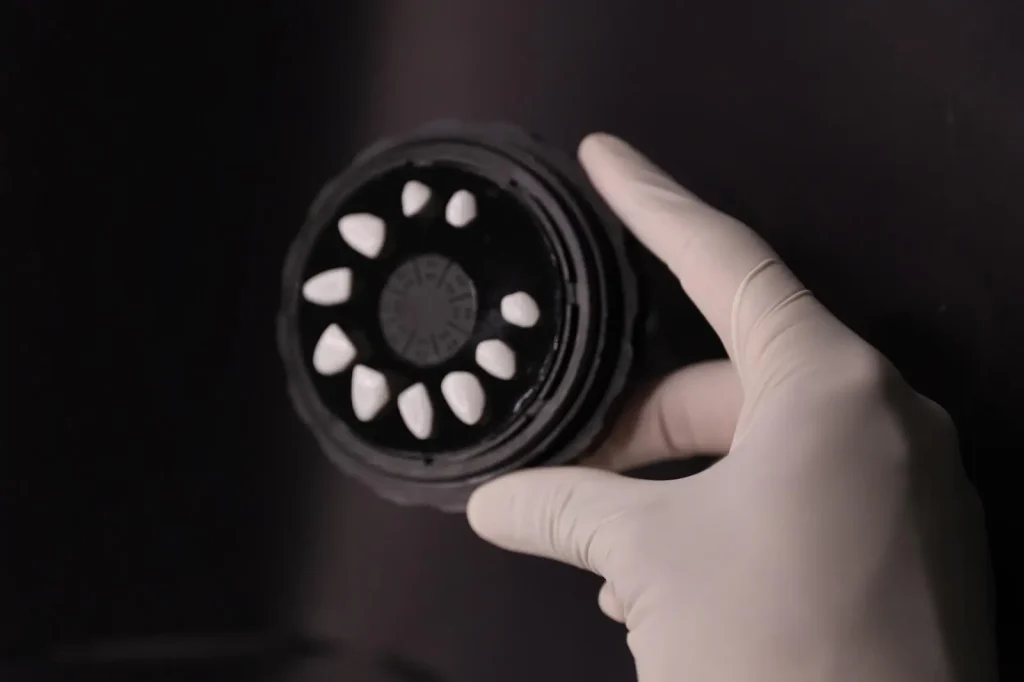
Here are 8 ways to discuss shade with your lab

Here are 8 ways to discuss shade with your lab.

  1. Take pre op pics
  2. Prep pics
  3. Pre op shade pics with tab
  4. Stump shade pics with tab
  5. Final shade pics vs temps
  6. Final shade pics vs prep shade
  7. Drawing the details on a photograph of lab script
  8. Material, shade, opacity/translucency level

If you’re a Dentist and are struggling with getting consistent results with your porcelain veneers & smile makeovers, then check out my free training to help improve your results.

Visit https://drtejaspatel.podia.com to find out more.

Summary:

  • Dental ce courses free
  • Dental ce courses online free
  • Veneer ce course
  • Cosmetic dentistry courses online
  • Cosmetic dentistry training courses

The Rise of Cosmetic Dentistry, Social Media, And Video Content

Let’s review some important statistics about the size of the market for cosmetic dentistry, social media usage, and video content.

The US Cosmetic Dentistry market size was valued at $3.9 billion in 2023 and is expected to reach $8.4 billion by 2033.

We will see the amount spent on cosmetic dentistry to double in ten years.

In 2024, in the United States, there are 239 million active social media users. Here’s a list of the most used social media sites ranked from highest to lowest in active users.

  1. Facebook
  2. Instagram
  3. TikTok
  4. Snapchat
  5. Pinterest
  6. X (Twitter)

The average amount of time that people in the US spend on social media is 2 hours per day.

Studies show that 95% of viewers retain a message when consumed through video content, compared to a 10% retention rate for text based content.

72% of people expressed a preference for watching a video to learn about products or services that they are interested in.

Social media usage, video content consumption, and the market for cosmetic dentistry are all trending upwards.